
Welcome to a new educational blog post where we explore the challenges of manual transactions for users and developers in crypto, and how onchain automation is the key for better user experience.
At Mimic, we are creating automation tools to simplify the way people code, execute, and scale blockchain projects. We want to share all our insights around exciting Web3 topics, and start setting the context of Mimic Protocol, our new decentralized automation layer, ahead of its public launch.
The early promise of crypto was ambitious: reduce reliance on traditional financial intermediaries and give users full control over their money.
Crypto has evolved a lot over the years, and the future is looking very promising. However, as anyone who’s handled manual crypto transactions knows, this promise of full control has come with a cost, notably in terms of user experience, both for developers and general public.
From Bitcoin’s early days to today’s complex and constantly changing space, manual transactions present a unique set of challenges, especially when it comes to crosschain ecosystems. Let’s break them down!
Early Web3 Days and the UX Dilemma
When Bitcoin was created, sending a crypto transaction meant more than just entering an address and clicking “send”. It involved multiple steps, and a deeper understanding of transaction fees, confirmation times, and wallet management.
Compared to traditional banking, or even online payment services (like PayPal or Venmo), where a user could send money in seconds with minimal effort, Bitcoin’s manual process was more complex for the average user. Thus in the beginning it attracted mainly tech enthusiasts and developers that saw the promise of a purely decentralized and digital currency.
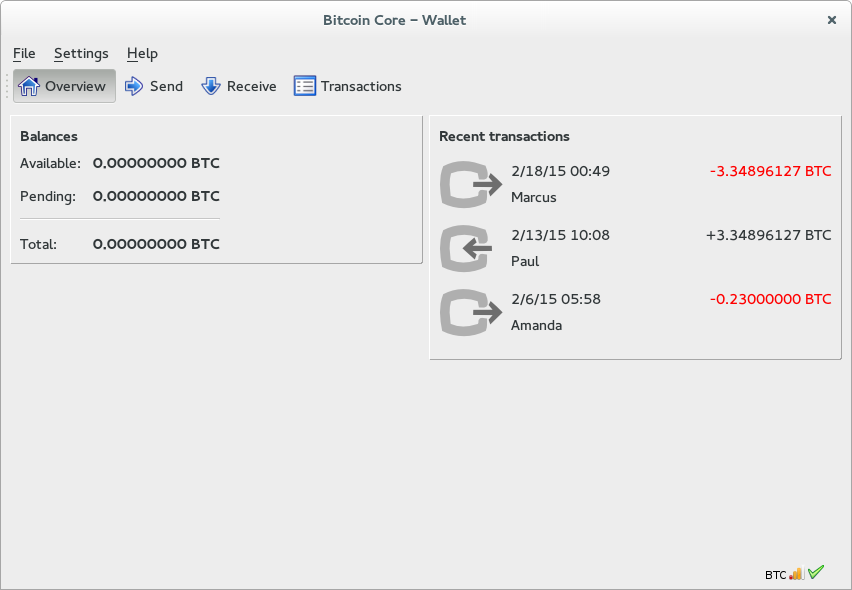
The first ever Bitcoin wallet, Bitcoin Core, was created by Satoshi Nakamoto himself:
Smart Contracts and the Explosion of Manual Transactions
Ethereum introduced the idea of adding code into the blockchain directly, allowing smart contracts and decentralized applications (dApps) to run inside the network. But this also introduced a layer of complexity. Each interaction with a smart contract (like staking, lending, or providing liquidity) became a manual transaction.
While smart contracts allowed new use cases for crypto, including DeFi, they were limited in terms of execution. Someone or something must call the smart contract with a transaction. This caused an exponential increase in the number of transactions users needed to handle.
UX Issues in The Beginning of Web3:
- Complex Fee Management: users had to manually set transaction fees, risking delays or overpayments.
- Address Management: long, unintuitive addresses led to frequent mistakes.
- Confirmation Anxiety: waiting for network confirmations was a new experience.
- Multiple Steps: a single DeFi action often requires 3-5 manual confirmations.
- Gas Fees: constantly fluctuating, requiring manual adjustments.
- Wallet Fatigue: users had to sign dozens of transactions daily, leading to errors and frustration.
Crosschain Protocols: Another Layer of Complexity
At the current stage of crypto, most protocols enable interactions across multiple blockchains, like Ethereum, Solana, or BNB Chain. While this expands the possibilities, it also increases the number of manual transactions required to interact on this level. The crypto landscape is more fragmented than ever, with new networks appearing constantly.
Cross-Chain Challenges:
- Multiple Wallets: managing assets across different chains.
- Bridge Risks: manually bridging tokens introduces both complexity and security risks.
- Synchronization Issues: keeping track of assets on various chains requires constant attention.
Manual Transactions for Users
Performing some basic onchain operations (like swaps or token transfers) manually once or twice seems manageable, but the situation changes when scale comes into play. What happens when you need to execute thousands of transactions, on multiple blockchains?
Suddenly, what was a simple task becomes a burden. A time-consuming and error-prone situation. Crosschain operations require users to manage assets, fees, and risks across different networks, while manually confirming each step. This level of manual interaction is simply unsustainable as the crypto ecosystem grows.
Here is a list of some of the main problems with manual transacting in crypto:
- Human error: entering the wrong addresses, miscalculating gas fees, or confirming the wrong transaction are common. There's no "undo" in blockchain.
- Time-consuming: each transaction needs careful review, especially when interacting with smart contracts. Time adds up quickly when every action is manual.
- Non-scalable: at some point manual transactions don’t scale. A power user handling a lot of transactions daily will encounter a bottleneck to grow.
- Cost inefficiency: mistakes, delays, or bad timing can lead to wasted gas fees, lost funds, or missed opportunities in the market.
- Tedious & repetitive: clicking “confirm” over and over is not fun. It’s also a poor use of time for users.
- Security risks: manual processes increase the chance of falling for phishing, malicious contracts, or simply making costly mistakes.
Manual Transactions for Developers
There are a lot of developers building their own custom solutions to tackle manual transactions, but sometimes they can become a serious bottleneck:
Scripting Solutions
To manage repetitive tasks like token transfers or smart contract interactions, many devs resort to writing custom scripts. While these can offer short-term relief, they demand constant maintenance, rigorous testing, and carry the risk of introducing new vulnerabilities.
Internal Tools
Larger teams might build internal tools or dashboards to streamline transaction handling, but these solutions divert valuable time away from actual innovation and product development. The more time developers spend on manual processes, the less they can focus on improving protocols, deploying new contracts, or enhancing user experience. Worse still, these ad-hoc solutions often rely on private data sources, server-stored keys, and manual intervention—introducing points of failure and security risks.
Manual Operations in Smart Contract Development
Time spent handling manual processes means less time writing code. Devs often delay pushing updates or deploying contracts due to the overhead of managing transactions manually, such as confirming execution states, or monitoring gas prices manually.
On the other hand, developing smart contracts is complex. The process requires a precise understanding of blockchain behavior, gas optimization, contract security, and integration across different protocols. If you add the need for constant manual intervention, such as crafting custom scripts for recurring tasks, checking for execution triggers, or rebalancing assets across chains, developers face increased mental workload and operational risk.
Increase of Crosschain Protocols
The rise of crosschain protocols has opened new possibilities for DeFi, but it has also added significant complexity for developers. Integrating multiple networks means dealing with different token standards, bridging mechanisms, and network-specific issues. Each chain has its own tooling, gas fee dynamics, and transaction confirmation processes, requiring developers to work on multiple environments at the same time.
Manual operations across chains amplify this challenge. Developers must monitor and execute transactions on different timelines, ensure asset security during bridges, and handle network-specific errors, all of which increase the risk of mistakes and slow down workflows.
Onchain Automation is the Future of Crypto Operations
Smart contracts and dealing with onchain assets is a high-stakes environment, where any small error can put funds at risk. Incorrectly calculated slippage, forgotten transaction parameters, or errors in private key management can threaten the security of blockchain projects.
Additionally, these manual workflows often rely on private, centralized data sources and infrastructure (like server-stored keys), introducing single points of failure and undermining the decentralized nature of blockchain systems. Without onchain automation tools, many teams build scripts that are difficult to program and maintain, lacking the flexibility, scalability, and security needed for robust DeFi operations.
As blockchain technology evolves, automation, batch processing, and smart UX layers will be critical. Developers and users alike need tools that reduce friction, eliminate manual bottlenecks, and allow the ecosystem to scale securely and efficiently.
Interested in learning more about onchain automation? Read our blog here.
At Mimic, we are building a crosschain automation protocol to simplify the way users build and scale blockchain projects. Mimic Protocol allows developers to define their rules, pick the tasks they want to automate, while the platform handles execution, offering full control over blockchain operations. Mimic enables teams to focus on innovation while the protocol ensures precision, efficiency, and trustless automation.
You can read the Mimic Protocol whitepaper here (pdf will open up).
Join the Mimic Protocol Waitlist
As onchain automation continues to transform the way DeFi teams operate, Mimic Protocol is paving the way for a new standard in programmable, decentralized execution.
Beta testing is starting soon. If you're a crypto developer or protocol operator, now’s your chance to get ahead of the curve.
Get early access to Mimic Protocol by clicking below 👇

Start simplifying how you code, execute, and scale blockchain projects. Let automation handle the busy work while you focus on building.
🐦 X (Twitter) | 📚 Documentation | 📄 Whitepaper | 💬 Discord | 🌐 Website | 🌀 Farcaster | 💼 LinkedIn