
TLDR: We found a way to replace an internal script we had to trigger manually with the Mimic Protocol, and we gained a lot of time, security, and saved resources!
They say the best products are the ones that you build to solve your own problems. Let’s dive right in into this first use case study of our Blockchain Automation Protocol.
The Context: Using Mimic Protocol for Internal Workflows
- We have a product called Fee Collector that consolidates onchain fees across networks into a single asset and chain, using secure automation.
- Every client gets their own dedicated and trustless environment, for extra security and reliability.
We had just finished the full integration for our new client, Indexcoop, and we were ready to deploy the Fee Collector, but there was one final catch. Indexcoop mints tokens that represent leverage positions, so you can access leverage without the complexity (e.g. BTC2x, ETH3x, etc.).
We set up the new environment and integrated the Indexcoop swapper, to access all the different fees. Since it’s leverage, you first need to withdraw the position, which was straightforward for us to do.
But it was not as straightforward as we expected...
The Problem
Each token (BTC2x, ETH3x, etc.) has its own fee contract, and fees only get sent to our depositor if someone manually calls accrueFeesAndDistribute() on each token.
Once the fees are in our depositor contract, the whole Fee Collector can go on as usual: swap → bridge → withdraw. But in this case we encountered two challenges:
- Anyone at any moment can call this function,
accrueFeesAndDistribute(), to collect the fees - The client asked to always call it, without threshold or any type of advanced logic
Normally we would set up a custom automation function on our product for this type of actions, but it would add more time as we would need to develop, test and deploy. And since the rest of the integration was ready, we decided to launch the Fee Collector with the idea to automate it later. In the mean time, someone from our team would take care of calling this manually once a week.
The Original Script Solution
To start processing the fees right away, we did it manually at the beginning. We would send one transaction per token pool, and setting a script that would trigger all the transactions at the same time. But it depended entirely on one of us to run it, being online, and not forgetting it.
We were ready to make a proper integration with a full smart contract when we realized we could use Mimic Protocol!
New Solution: From Script to Protocol
Since it’s a very straight-forward function call, we decided to automate it with Mimic Protocol. Once a week, an address must execute a series of calls to Indexcoop's fee contracts.
Our tech lead Agustín programmed the task, which is very simple, since there are no threshold verifications or anything out of the ordinary.
For example here we can see it in action in Arbitrum:
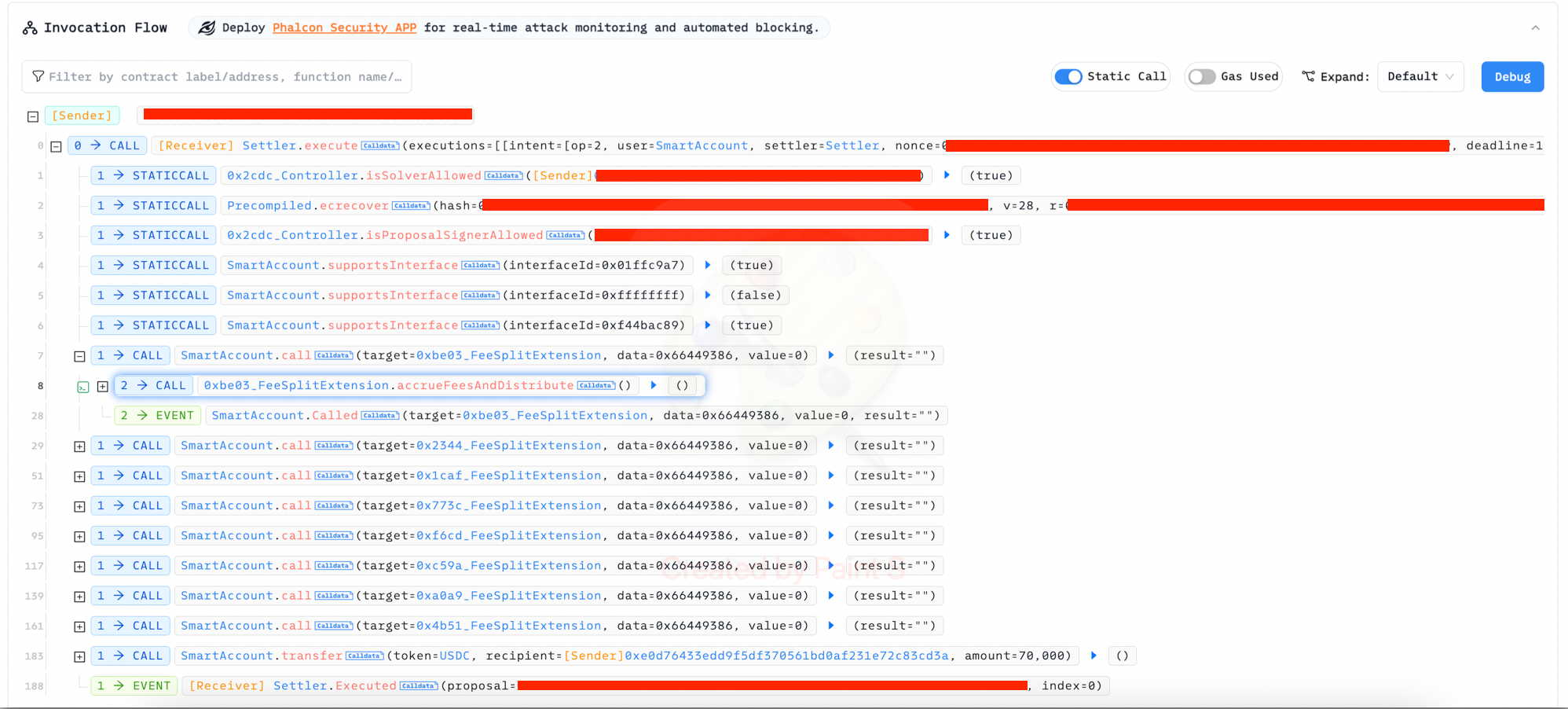
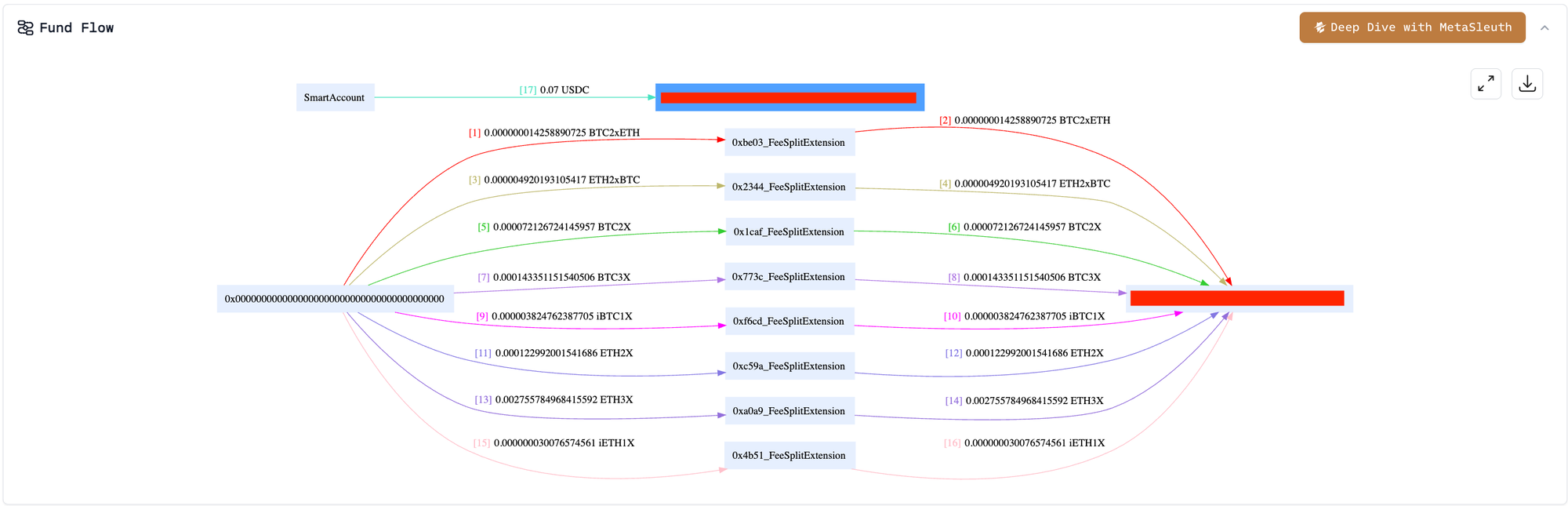
Each "FeeSlitExtension" contract obtains the fees for each token (BTC2x, BTC3x, ETH2x, etc etc) and sends them to the depositor contract of Indexcoop’s environment. Also we can see a nice graph of all the different tokens being transferred:
What We Gained and Why it Matters
We were about to write more code. Instead, we used our automation protocol, saving time, resources, and gaining security, plus a lot other benefits:
- No manual steps to forget
- No need to over-engineer a simple task
- We realized even our internal operations can use the same tools we are offering users!
In hindsight, this was an ideal Mimic Protocol use case, and we are very happy with the results. It is live on Arbitrum and Base, which means even if our automation protocol is in alpha version, it’s viable and genuinely useful for improving internal operations.
The Lesson
While this is a basic use-case, it's good to see the protocol working, and already making our lives easier. Mimic Protocol is able to do so much more, but this also shows the flexilibity of the system: it can cover from very simple and specific actions (like calling multiple contracts at the same time) to more complex needs around treasury management or portfolio rebalancing.
The next time you're about to solve a repetitive blockchain operation with a script, ask yourself:
Would my life improve if I automate this?
If the answer is yes, think about using Mimic Protocol!
Join the Mimic Protocol Alpha
As onchain automation continues to transform the way teams operate, Mimic Protocol is building a new standard in programmable, decentralized execution for Web3.
Alpha testing will start soon! If you're a crypto developer or protocol operator, now’s your chance to get ahead of the curve.
Get alpha access to Mimic Protocol by clicking below 👇

Start simplifying how you code, execute, and scale blockchain projects. Let automation handle the busy work while you focus on building.
🐦 X (Twitter) | 📚 Documentation | 📄 Whitepaper | 💬 Discord | 🌐 Website | 🌀 Farcaster | 💼 LinkedIn